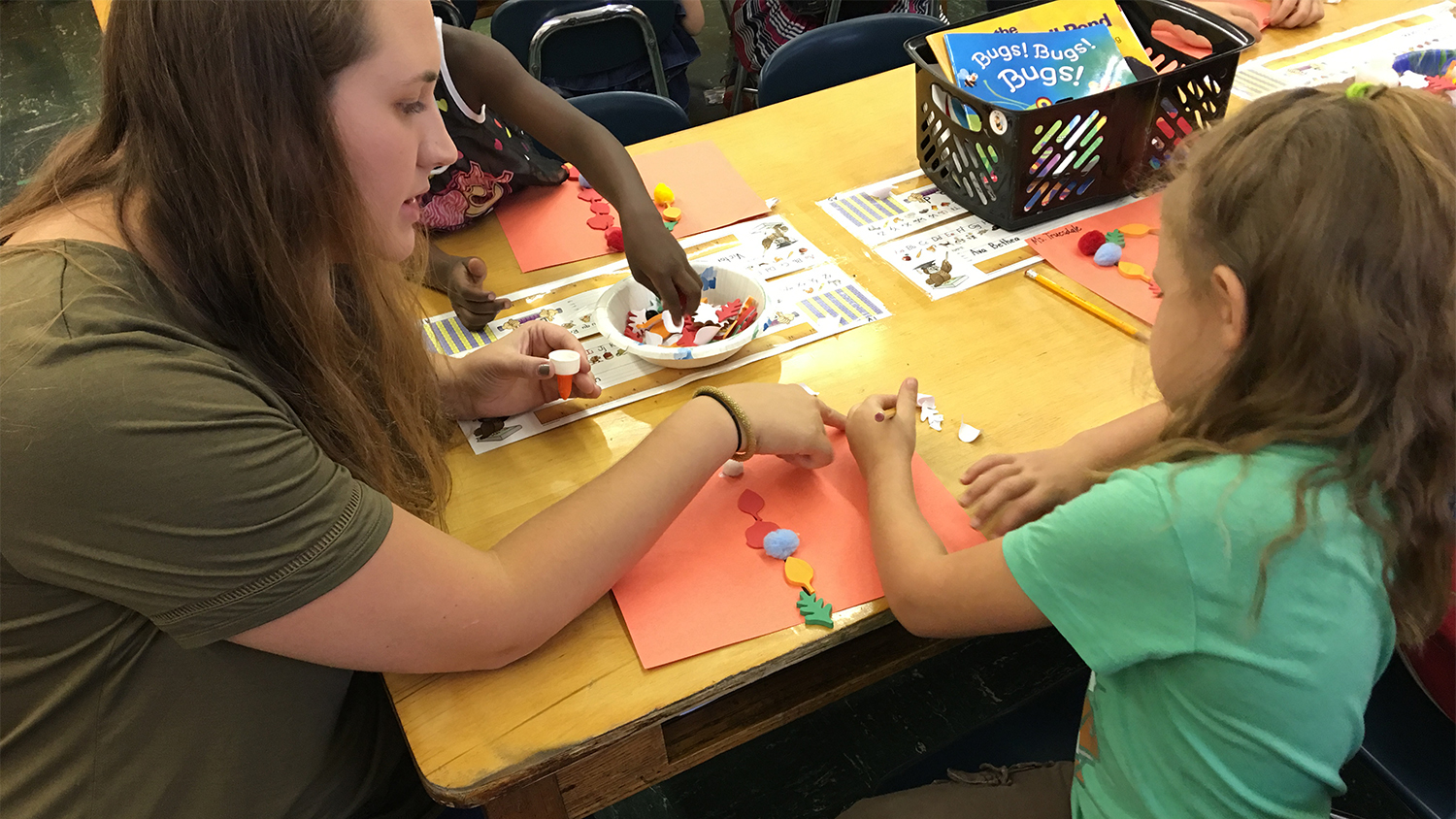
MAT in Elementary

Graduates from the North Carolina State University MAT Elementary Education program will

  • become teachers of quality for all children; they will demonstrate values and dispositions characterized by a sound commitment to social justice, especially for underserved and vulnerable populations of children.
  • use developmentally appropriate, culturally relevant, child-centered pedagogy in teaching young children.
  • have depth of knowledge in the content areas of the elementary school curriculum, especially in math, science, technology and literacy.
  • implement research-verified practices in all areas of the elementary education curriculum.
  • employ proven practices of teaching using appropriate technology tools.
  • foster sound and productive collaborative relationships with students, families, and colleagues.
  • make instructional decisions based on sound evidence of student work and meaningful assessments.
  • become deeply and productively reflective in their own practice of teaching, so that reflection will become a habit of mind.
  • succeed in a range of high quality, supervised school-based experiences with area partnership schools, including participation in guided inquiry regarding current practices in elementary education.
  • contribute to the continuous assessment and improvement of preparing elementary education professionals.  
  • participate in innovative courses, experiences and opportunities that will prepare them for teaching in the twenty first century.
  • participate in communities of practice both face to face and virtually.

Core Course Requirements

ED 507 
Principles of Developing and Interpreting Assessment
2 hrs   Offered in Fall

Designed to enable students to understand and use appropriate classroom assessment practices by applying knowledge of pedagogy and development to high-quality strategies for formative and summative assessment. Students will explore best practices using developmentally-appropriate assessment strategies including authentic assessment, portfolios, and electronic portfolios, real-time feedback, open-and closed-ended formal assessments, and standardized testing. Particular attention will be paid to examining the rationale fore assessment, and the implications of assessment.

ED 508 
Exploring Diversity in Classroom and Community 
3 hrs   Offered in Summer

Students will explore and apply the major philosophical and historical influences to current educational context as they relate to issues of diversity. Focus will be placed on theoretical and practical issues of diversity in classroom settings, especially related to culture, race, gender, ethnicity, language, and socio-economic levels. (Field-based experiences will be required).

ED 570 
Classroom Action Research

1 hr   Offered in Summer

Provides a brief introduction to educational research focusing specifically on classroom action research. Requires admission to MAT.

ED 571 
Inquiry and Professional Development
1 hr   Offered in Fall

Builds on earlier course work (ED 570) preparing students to refine an action research proposal, collect data, write a report, and to identify resources and activities that will support their ongoing professional development.

ED 572
Teacher Leadership
1 hr   Offered in Spring, Summer, and Fall

This course explores the multiple contexts, roles, and approaches to teacher leadership in classrooms, schools, communities, and professional organizations. Requirement: 25 credit hours in the MAT program; Co-requisite-ED 569.

ED 569
Teaching Internship: MAT
4hrs   Offered in Spring, Summer, and Fall

A supervised teaching experience, requiring a minimum of 10 consecutive full-time weeks in an appropriate school classroom.  Designed to develop the knowledge, skills, and dispositions necessary for teaching at the elementary, middle, and/or secondary level.  Includes regularly scheduled clinical observations and conferences. Requires successful completion of at least 25 hrs. in the MAT program and approval by specialty area faculty. Student is responsible for transportation to placement site.  Co-requisite-ED 572

ECI 579
Organization and Behavioral Management of Inclusive Classrooms
3hrs   Offered in Summer

To increase students' knowledge of persons with high incidence disabilities (i.e., learning disability, mild intellectual disability, and serious emotional disability), and how to manage the behavior of all pupils in educational environments. Characteristics of students with high incidence disabilities will be emphasized, as well as strategies to reduce the likelihood of problem behavior of all pupils in the classroom.

Specialty Area Course Requirements

The courses that make up the Elementary Education program are usually, but not always offered during the semesters noted under each course.  The program coordinator reserves the right to change the schedule based on student enrollment or faculty availability.

ELM 571
Language Arts, New Literacies, and Media for Initial License
3 hrs   Offered in Fall

Intended for teachers seeking to expand their knowledge and skills in assessing and teaching elementary reading, particularly to students with reading difficulties. Exploring the purposes, sequences, and materials for identifying students' instructional strengths and learn methods for providing appropriate evidence-based reading instruction. Closely links reading assessment and reading instruction and addresses relevant content topics in elementary reading development, assessment, and instruction.

ELM 572
Methods for Teaching Reading in the Elementary Classroom for Initial License
3 hrs   Offered in Fall or Spring 

Theoretical foundations of reading instruction and current methods and materials for teaching reading, with emphasis on planning and implementing reading programs for children in kindergarten through grade six.

ELM 573
Methods of Teaching Elementary School Science for Initial License 
3hrs   Offered in Spring

This course is intended for teachers seeking to expand their knowledge and skills in teaching elementary school science. The course examines the purposes, scope, sequences, materials, and methodologies for teaching science in elementary schools to a diverse student body. It develops skill in planning, instructing, and assessing understanding of science content and processes. It links instruction and assessment and addresses relevant content topics life science, physical science, and earth/space science.

ELM 574
Methods for Teaching Elementary Mathematics for Initial License
3 hrs   Offered Spring

Focus on theory, research, and methodology of teaching and learning mathematics in elementary and middle grades. Emphasizes the development of a foundation for understanding and assessing mathematical growth and learning through historical and psychological sources, research, and reflective practice. Emphasis is placed upon understanding how children come to learn elementary mathematics meaningfully and what this necessarily implies about the way mathematics is taught and how elementary and middle grades education can be improved.              

ELM 575
Methods for Teaching Elementary Social Studies for Initial License
3hrs   Offered in Fall

Advanced professional training in teaching of social studies for middle grades and elementary teachers, including in-depth introduction to research-based teaching strategies, instructional resources and literature of the field.   

ELM 515
School Experiences I
1 Credit   Offered in Fall

Prepares pre-service teachers to develop competencies in assessment, instructional design, and tutoring and leads to initial licensure in the elementary grades. Includes 15-20 hours of fieldwork; transportation to schools is the responsibility of the students.

ELM 516
Instructional Practices in Schools II
2 Credits   Offered in Spring

Prepares pre-service teachers to develop competencies in assessment, instructional design, and teaching in whole class settings and leads to licensure in the elementary grades. Includes 30 hours of fieldwork; transportation to schools is the responsibility of the students.

Lead & Serve

Back to Top