NC State Home

Graduate Programs

Our nationally ranked degree and certificate programs are led by faculty and staff committed to the success of our more than 600 students.

Growth Opportunities
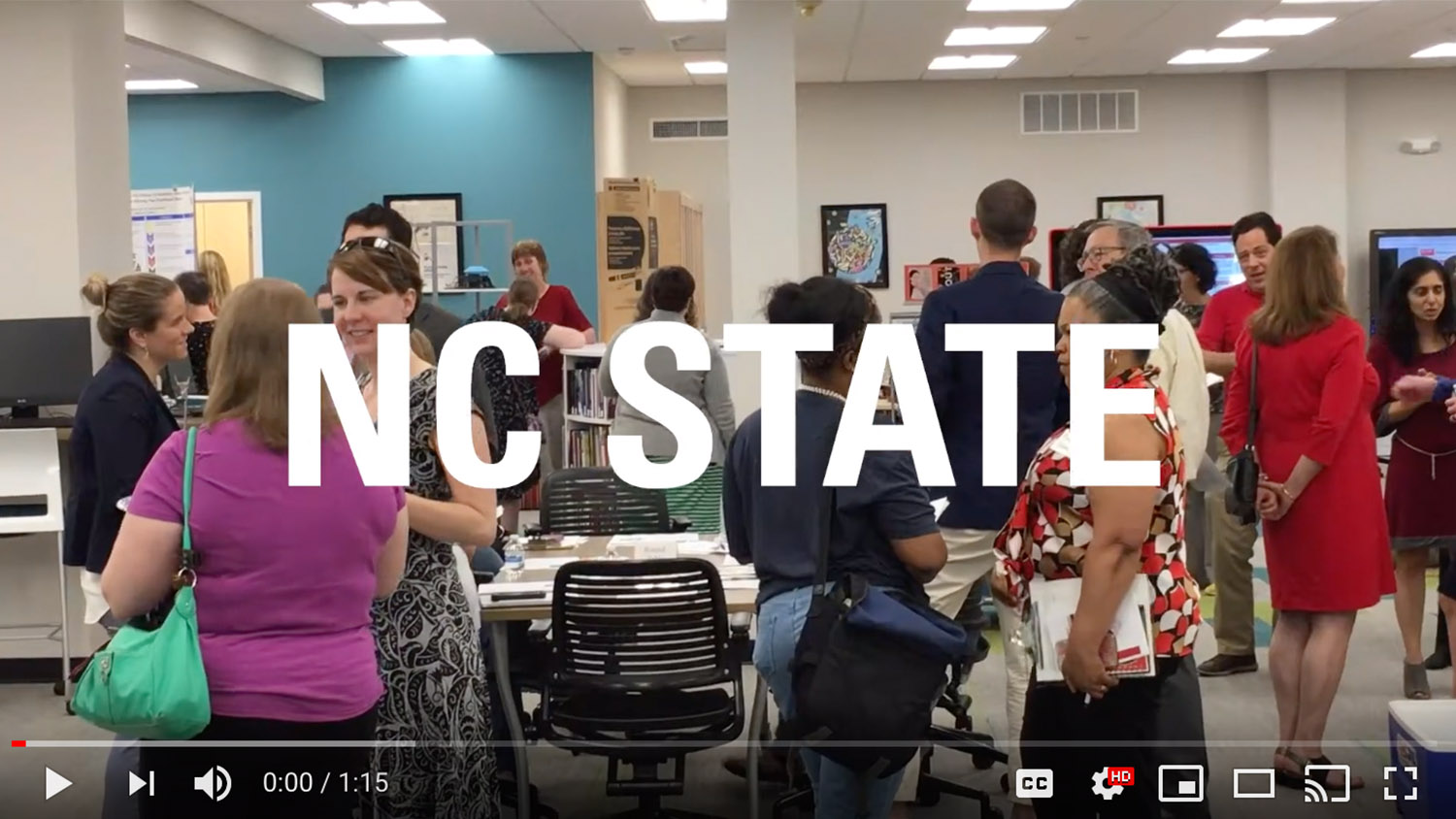
Graduate students in the NC State College of Education’s Department of STEM Education share how the department is preparing them for the next stage of their careers, including the opportunity to conduct original research and build collaborative relationships with faculty and other students.

STEM Education Research Symposium

Master of Arts in Teaching (MAT)

Master of Arts in Teaching

Our Master of Arts in Teaching program offers the following STEM concentrations: Mathematics Education, Science Education, and Technology, Engineering, and Design Education. Our mission is to prepare master’s degree-seeking students to teach in K-12 schools and in the content area of your choice through our accelerated teaching licensure program with a 100% online option. You will earn both an initial teaching license and a master’s degree from North Carolina’s leading college of education.

Teacher instructing two elementary school students

Master of Science in STEM Education: Concentrations

Engineering and Technology Education

We prepare the next generation of leaders in Engineering and Technology Education to serve as master teachers, program directors, and other leadership positions in schools (K-16) and informal educational settings.

Small robot in a classroom.

Mathematics and Statistics Education

We prepare master’s degree-seeking students for positions of instructional leadership in Mathematics Education as master teachers of mathematics in middle grades (6-9), high school (9-12), or post-secondary institutions such as community colleges.

Two people working on a tablet in a school library.

Science Education

We prepare master’s degree-seeking students for positions of instructional leadership in both formal and informal education settings. This could be as a master teacher, STEM coordinator, or another leadership role in a secondary school, as a teacher at a community college, an education professional at a museum or aquarium, or in another professional position such as the state Department of Public Instruction. 

Two teachers working together in a classroom.

Ph.D. Concentrations

Engineering and Technology Education

Graduates of this concentration become rising leaders in engineering and technology education in K-12 formal and non-formal settings. Through scholarly pursuits in the field, learning and teaching, and public policy they take positions as scholars, supervisors, teacher educators, non-formal science/engineering educators, entrepreneurs, designers, and as faculty members in institutions of higher education.

A robot on a table in a classroom.

Mathematics and Statistics Education

The Mathematics and Statistics Education concentration develops scholars who address issues related to the theory and practice of K-16 mathematics and/or statistics education. Students develop expertise in cutting-edge technology to bring about digital transformational approaches to learning, teaching, and assessment for a globally connected world.

A student working on a laptop in a classroom.

Science Education

Graduates from our concentration become state and nationally recognized leaders in science education. You will have the opportunity to work with nationally recognized experts in many facets of science education research and practice.

Teachers working together in a classroom.

Ed.D. Program

Technology Education

The Doctor of Education Degree in Technology Education is a highly individualized program that mentors students to become competent professional leaders in professions that encompass technology.

Three teachers looking at a computer in a library.

Certificates

Mathematics Teaching and Learning

Expand your expertise in teaching and learning mathematics through this 12-hour, fully online graduate certificate program.

A student writing on a whiteboard.